
You need to define exclusivity by Sunday, disclose something difficult, or set a boundary before another trust test begins. Classify the current behavior first: healthy depth, attachment activation, control, or repair-ready vulnerability. Then choose one action—speak, pause, set a boundary, or leave safely—and time only a safe, mutually wanted conversation.
In a birth chart, Venus in Scorpio means attraction, pleasure, values, and relationship style move through fixed-water themes of privacy, loyalty, emotional risk, merging, and truth beneath appearances. It can love with unusual focus and courage around difficult feelings. Under stress, that focus can become testing, possessiveness, secrecy, or an attempt to remove uncertainty by controlling another person’s choice. The practical line is observable: intimacy increases consent and mutual knowledge; control reduces choice.
Sidera reads this placement with a four-state test: healthy depth, attachment activation, control, and repair-ready vulnerability. Naming the state determines the next move: deepen, regulate before speaking, set a boundary, or seek support. Begin with Venus’s broader role in love and values, then use the 8th-house guide when shared resources or vulnerability are central.
Primary job of this guide: use Venus in Scorpio as context for one trust-defining conversation—decide whether it should happen, what it must decide, and which general window fits after safety and consent are established.
Decision Brief: Speak, Pause, Set a Boundary, or Leave Safely
| Current evidence | Next action | Do not use timing to… |
|---|---|---|
| Mutual honesty and choice | Schedule a focused truth-telling conversation | Manufacture drama or force disclosure |
| Checking, testing, catastrophic stories | Pause, regulate, and verify facts | Call fear “intuition” |
| Surveillance, isolation, threats, or leverage | Protect autonomy and seek qualified support | Optimize a confrontation that may be unsafe |
| A named harm plus willingness to repair | Define one changed behavior and review date | Treat intensity as proof of change |
Before scheduling, write the one decision the conversation must produce: an agreement, a boundary, a disclosure, or a respectful ending. If there is no decision, the exchange can become an intensity loop instead of repair.
General 2026 Conversation Shortlist After Safety and Consent
What Sidera scored: every day in a 507-day range for the activity “important conversation,” using Mercury, Venus, and the Moon. A day needed at least 4.5/5, a waxing Moon phase, and Mercury direct to be publishable. A high number was discarded if one of those activity rules failed. The 1–5 score is the final general ranking; quality helps sort otherwise similar signals, while intensity means stronger—not safer or better.
The dataset was generated August 12, 2026 at engine baseline 382200b; 13 of 17 monthly slots qualified and four held. It is the right Sidera activity for this article because disclosing, defining exclusivity, and stating a boundary are all important conversations. It does not score the relationship, consent, safety, location, or either natal chart, and it is not evidence about Scorpio-Venus personalities.
The complete monthly method and remaining dates are in Sidera’s important-conversation timing guide.
| Calendar output | Why it passed or failed | Use / avoid | If unavailable |
|---|---|---|---|
| September 22 — 4.5/5; quality 7.5; intensity 4.2 | Waxing Gibbous; +0.10 phase and +0.37 aspects cleared the threshold | Use for one lower-intensity clarification; avoid loading it with several disputes | Use a safe fixed date with a single question |
| October 16 — 4.7/5; quality 8.5; intensity 4.6 | Waxing Crescent; +0.30 phase; VOC and Venus retrograde disclosed, Mercury direct | Use for a scoped disclosure or boundary; document follow-up | Prefer September/December when follow-through risk matters |
| November 22 — 5.0/5; quality 8.0; intensity 8.5 | Waxing Gibbous and all purpose-built rules passed | Use with a pause plan; never for an unsafe confrontation | Choose a calmer qualified window if regulation is uncertain |
| December 19 — 5.0/5; quality 9.6; intensity 7.3 | Waxing Gibbous; Mercury direct; +0.83 supportive aspects | Use for a mutually wanted decision conversation with preparation | Keep the safe fixed date and strengthen scope/follow-up |
| November 28 — rejected despite 5.0 raw | Waning Gibbous failed the conversation phase gate | Do not promote as a best date | Pick a qualified candidate or use the fixed-date protocol |
Choose the Date by the Conversation You Can Actually Hold
| Real situation | Best fit from the shortlist | Prep required |
|---|---|---|
| One lower-intensity clarification | September 22 | One question and one decision deadline |
| Reviewing an old term, apology, or boundary | October 16 | Put the changed agreement in writing; Venus retrograde is disclosed |
| More preparation is valuable and both people regulate well | November 22 | A pause signal, return time, and no surprise disclosures |
| A mutual decision needs the strongest available quality signal | December 19 | Scope, documents, privacy, and a follow-up date |
| The preferred date is unavailable or the deadline is fixed | The safest executable date | Treat astrology as preparation; practical safety and consent control the decision |
Quality helps compare signal coherence among dates that already passed. Intensity describes strength, not goodness: it never overrules regulation, consent, or logistics.
If the Conversation Date Is Fixed
- Screen safety and consent before astrology; do not optimize a coercive confrontation.
- Limit the meeting to one decision question, choose privacy, and agree on a pause signal plus return time.
- Decide what happens if there is no answer: another dated check-in, a boundary, or a respectful exit.
These dates are general. If the conversation is safe and mutual, localize the shortlist with both charts, location, and actual availability.
Localize conversation timing →Venus in Scorpio in Love
The following placement language summarizes astrological tradition and practitioner interpretation; it is not scientific evidence that one placement causes a behavior. Use it to form questions, then verify those questions against consent, history, and observable actions.
| Question | Common expression | Mature expression |
|---|---|---|
| What attracts it? | Emotional honesty, mystery, courage, loyalty, psychological depth | Curiosity without interrogation |
| How does it bond? | Private disclosure, focused attention, shared risk, strong erotic or emotional chemistry | Closeness with explicit consent and separate autonomy |
| What threatens it? | Ambiguity, betrayal, divided loyalty, feeling replaceable | Verifying facts before acting on fear |
| How does it show loyalty? | Protecting confidences, staying through difficult truths, concentrated effort | Commitment without possession or isolation |
| What supports repair? | A named truth, a clear boundary, changed behavior, a return time | Accountability that does not require a crisis |
Why Venus Is Called “in Detriment” in Scorpio
Traditional essential dignity places Venus opposite Taurus, one of the signs Venus rules, so Scorpio is called Venus’s detriment. This does not mean the person is bad at love or destined for harmful relationships. It describes a tension: Venus seeks ease, connection, and agreement, while Scorpio symbolism emphasizes risk, conflict, privacy, and irreversible merging. Maturity comes from making depth consensual and making loyalty compatible with freedom.
What Changes the Interpretation
- House: the 2nd can focus trust on money and self-worth; the 5th on romance and creative risk; the 7th on partnership agreements; the 8th on shared resources, intimacy, and dependency.
- Aspects: Saturn may slow trust or formalize commitment; Mars can add direct pursuit and conflict; Neptune can blur evidence with fantasy; Pluto can intensify compulsion and power questions; Uranus can increase the need for freedom inside attachment.
- Wider chart: the Moon shows regulation needs, Mars shows conflict and pursuit, the 7th house describes partnership conditions, and exact synastry contacts add context without creating consent.
Compatibility Without Reductionism
Venus-sign chemistry describes a preference, not relationship capacity. A compatible partner for Venus in Scorpio is not simply a water or earth sign; it is someone who can answer direct questions, protect confidences, negotiate exclusivity, respect privacy without demanding secrecy, and allow separate friendships, money, and choices. Strong attraction without those behaviors is intensity, not compatibility. Compare Venus in Aquarius when the live tension is depth versus autonomy.
Healthy vs Shadow Matrix
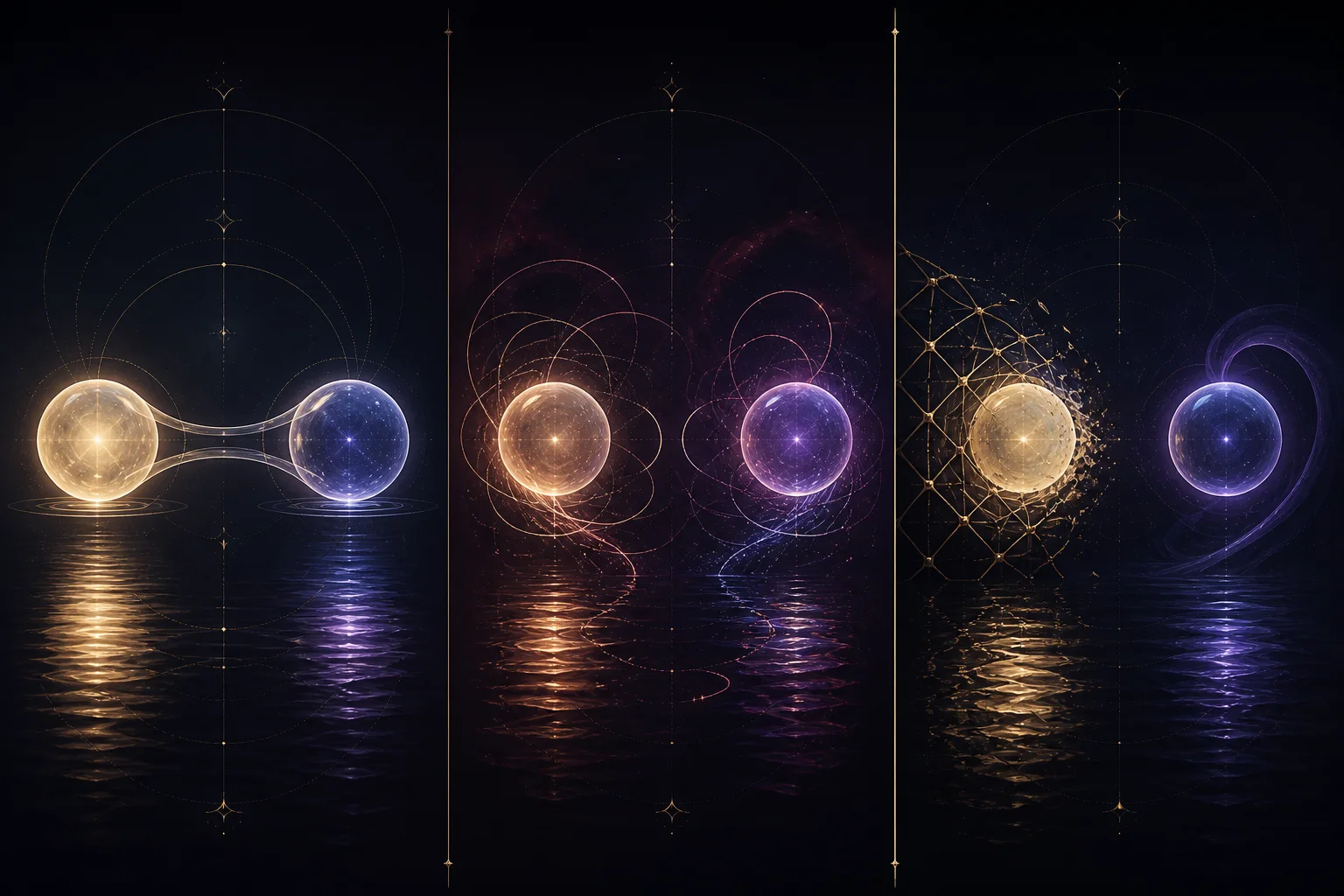 Healthy depth preserves a two-way bridge; activation tangles the signal; control turns uncertainty into a cage. Use behavior—not emotional intensity—to identify the state.
| Theme | Healthy depth | Attachment activation | Control pattern | Repair-ready move |
|---|---|---|---|---|
| Attention | Focused presence | Monitoring for threat | Surveillance | Ask the direct question |
| Loyalty | Reliable commitment | Fear of replacement | Isolation or possession | Define agreements and autonomy |
| Vulnerability | Honest disclosure | Testing before trusting | Using secrets as leverage | Share one truth without a test |
| Conflict | Naming the hidden issue | Escalation for reassurance | Punishment or withdrawal | Set a pause and return time |
| Transformation | Changing behavior after insight | Repeating crisis for intensity | Forcing change in the other person | Choose the behavior you control |
Venus describes relating, value, pleasure, attraction, and aesthetics. Scorpio brings fixed-water focus and Mars/Pluto symbolism. In traditional dignity language, Venus is in detriment in Scorpio. That does not mean a defective person; it means Venusian ease works through terrain that emphasizes risk, privacy, conflict, and merging. The house, aspects, and full chart determine how that tension is handled.
What Most Guides Miss: Depth Is a Behavior, Not a Mood
Feeling intensely does not automatically create a deep relationship. Depth requires accurate knowledge, consent, reciprocity, and the ability to stay honest when control is unavailable. A bond can feel magnetic and remain emotionally shallow if both people only repeat pursuit, withdrawal, jealousy, and reunion.
Use this practical distinction:
- Intensity asks: How strongly do I feel this?
- Intimacy asks: What do we know, disclose, negotiate, and repair together?
- Control asks: How can I remove uncertainty without the other person’s free participation?
Worked Decision: One Truth, One Boundary, One Return Time
Suppose repeated mixed signals trigger checking and a demand for proof. Instead of escalating, the reader writes one fact, one fear, and one request: “We have not defined exclusivity; I am afraid I am assuming it; can we decide by Sunday?” If both people consent, the timing model can help choose among available conversation windows. A November 28 raw 5.0 still fails because the activity rule rejects it; intensity does not overrule the gate.
When the conversation time cannot move, use astrology as preparation rather than permission. Choose a safe/private setting, limit the scope, set a pause-and-return time, and decide in advance what boundary follows from no answer. If coercion or violence is possible, prioritize safety planning and professional support over any astrological timing.
If both September 22 and November 22 fit the calendar, a one-question clarification favors the lower-intensity September option. A later, prepared decision conversation may fit November, but its higher intensity makes the pause plan more important. Logistics and emotional regulation choose between qualified dates; the higher score does not automatically win.
Social Listening: Readers Want Nuance, Not a Jealousy Stereotype
Qualitative discussions repeatedly ask whether intensity is automatically unhealthy and how maturity changes jealousy or possessiveness. These mixed-chart anecdotes are reader-language, not evidence for personality or timing claims. They matter only because they reveal the decision pressure behind the search: readers need observable distinctions between intimacy, activation, and control. Sources include discussion of healthy intensity and jealousy and requests for behavior beyond generic traits.
Operator Workflow: State, Safety, Action, Timing
- State: classify healthy depth, attachment activation, control, or repair-ready vulnerability from behavior.
- Safety: stop the timing workflow for surveillance, isolation, threats, leverage, or fear of retaliation.
- Action: choose one disclosure, agreement, boundary, or exit decision; do not schedule an intensity loop.
- Timing: shortlist only safe, mutually wanted conversations; otherwise use the fixed-date protocol or qualified support.
Common Mistakes
- Treating jealousy as proof of love.
- Calling control “protectiveness.”
- Assuming traditional detriment means a bad person or failed relationship.
- Reading compatibility from Venus signs alone.
- Confusing a magnetic synastry contact with consent or long-term capacity.
- Using astrology to excuse surveillance, coercion, or emotional punishment.
Use This Now: One Fact, One Request, One Deadline
- Today: write one verified fact, one fear, and the one decision the conversation must produce.
- Before scheduling: classify the state. Do not use a timing shortlist for control, coercion, or an unsafe confrontation.
- When both consent: compare the general dates with privacy, regulation, logistics, and real availability.
- Fallback: if the date is fixed, set scope, a pause signal, a return time, and the boundary that follows from no answer.
Methodology Note and Scope
This guide uses a June 18, 2026 Research Pack combining current search gaps, traditional dignity references, practitioner sources, and qualitative community language. Cafe Astrology’s Venus-in-signs reference, its Scorpio Venus compatibility guide, and Astrostyle’s dignity overview provide interpretive context. Sidera data describes a transparent timing method, not personality evidence. Astrology should never excuse abuse or replace professional relationship support.
FAQ
Is Venus in Scorpio always jealous?
No. Jealousy can appear when attachment feels threatened, but maturity, history, aspects, communication, and the full chart matter more than one sign.
How does Venus in Scorpio show love?
Often through focused attention, loyalty, private disclosure, emotional honesty, and a desire to understand what is beneath the surface.
What is the shadow side?
Testing, possessiveness, surveillance, using secrets as leverage, withdrawal as punishment, or confusing crisis with depth.
What does Venus in detriment mean?
It means traditional astrology considers Venus less direct or comfortable in Scorpio’s terrain. It is an interpretive condition, not a moral judgment or prediction of relationship failure.