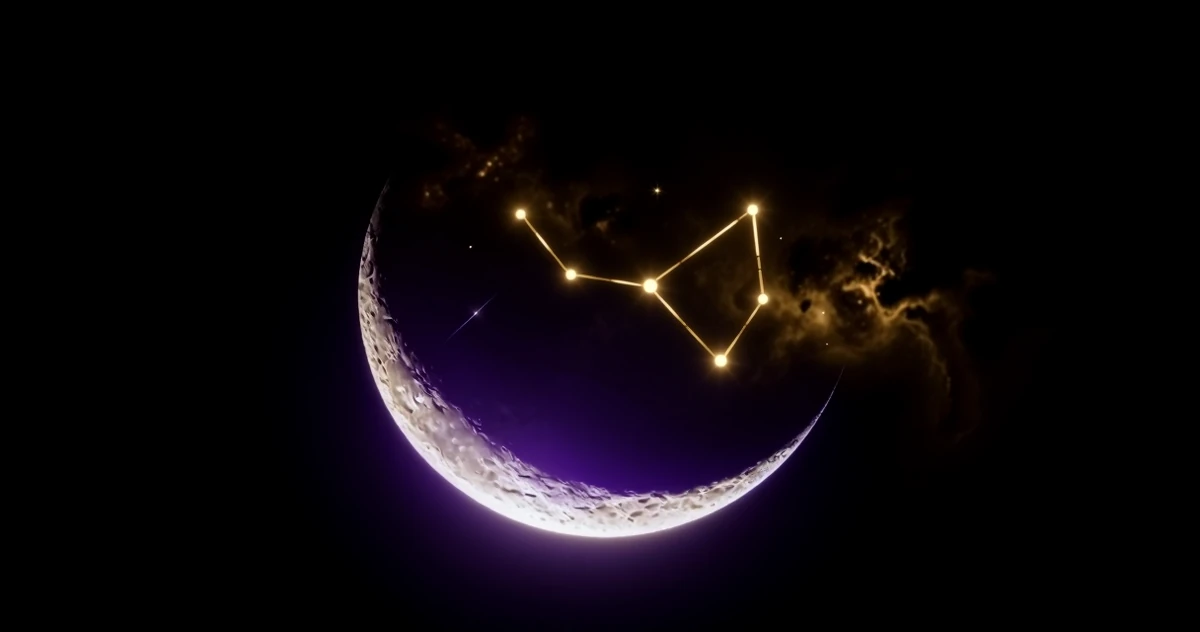
Cancer is the sign most associated with emotional intelligence, nurturing, and deep feeling. What rarely gets examined is the protective structure built beneath all that warmth and what it costs.
Cancer’s shadow is not moodiness. Moodiness is the symptom. The actual shadow is a survival architecture: emotional patterns constructed early in life to protect something tender that once got hurt, and then calcified into default behavior that no longer serves.
This guide works through the four core Cancer shadow patterns, the developmental wound underneath them, and what genuine integration looks like. Not as self-improvement, but as an honest encounter with what you have been protecting yourself from.
As Liz Greene writes in The Astrology of Fate (1984): “The birth chart does not lie. It maps the unconscious patterning that, once brought to light, is no longer compulsive.” Cancer’s patterns are not character flaws. They are adaptive strategies that outlived their usefulness.
What Is Shadow Work?
Shadow work is the practice of examining the parts of your personality you have disowned, hidden, or projected onto others. The psychoanalyst Carl Jung called the shadow “the sum of all personal and collective psychic elements which, because of their incompatibility with the chosen conscious attitude, are denied expression in life.”
For Cancer, the shadow is not rage or ambition. The Cancer shadow is built from suppressed need: the places where the emotional hunger was too large, too inconvenient, or too exposed, and so was retrofitted into caretaking, manipulation, or controlled withdrawal.
Want to see exactly which planets and houses shape your Cancer shadow? Your birth chart shows the full picture.
The Developmental Wound
Most Cancer shadow patterns originate in early caregiving environments where emotional attunement was inconsistent or conditional. When a child’s emotional needs were met sometimes but not reliably, the nervous system learns a specific strategy: become the one who gives, not the one who needs. Anticipate others. Control the emotional temperature of the room. Make yourself indispensable.
This is adaptive. It works. The problem is that the same strategy, running on autopilot twenty years later in adult relationships, becomes controlling behavior disguised as care.
The Moon completes its cycle every 27.3 days, returning to the same natal degree in what astrologers call the lunar return. This monthly reset makes Cancer’s emotional field unusually responsive to environmental and relational shifts. What psychologists have documented in attachment research maps directly onto this sensitivity: inconsistent early caregiving consistently produces anxious attachment patterns characterized by hypervigilance to relational signals, compulsive caretaking, and difficulty receiving care without suspicion.
The wound is not that Cancer feels too much. It is that expressing need felt dangerous, and that early lesson never got updated.
Four Core Cancer Shadow Patterns
1. Caretaking as Control
The most misunderstood Cancer shadow pattern looks like generosity. Cancer gives: time, energy, food, emotional labor, presence. What often goes unexamined is the function the giving serves. As long as you are the one providing for others, you are never in the exposed position of needing something back.
Caretaking as control is not malicious. It is a structural avoidance of vulnerability. The tell is the discomfort Cancer feels when someone tries to care for them: the deflection, the insistence on being fine, the slight irritability when help is offered. If receiving care feels threatening, the caretaking pattern is running a control function.
The integration question: What would it mean to let someone look after you without immediately redirecting back to their needs?
2. Emotional Withdrawal as Indirect Communication
Cancer rules the shell as much as the home. When hurt, Cancer retreats into silence, emotional distance, or sulking. Not as manipulation (though it can become manipulative) but as the only form of communication that feels safe. Direct expression of hurt feels too exposed. Withdrawal maintains dignity while still sending a signal.
The shadow dimension is that withdrawal communicates something is wrong without making it possible for the other person to understand what, or to actually repair it. It punishes without explaining. Over time, it creates a pattern where Cancer is perpetually “fine” but also perpetually hurt by things that were never addressed.
The integration question: What would happen if you said the thing directly instead of waiting for the other person to notice?
3. Emotional Memory as Identity Architecture
Cancer’s capacity for emotional recall is extraordinary. The sign carries its history with it: past hurts, past betrayals, the warmth of old belonging, the cold of old rejection. This memory creates depth and loyalty. It also creates a particular shadow: the old wound kept alive because letting it go feels like losing something essential.
The pattern shows up in relationships that ended years ago still being used as evidence about what people always do. Or in childhood wounds being referenced as explanations for current choices. The emotional memory is not the shadow. The shadow is the refusal to let the memory update in the face of new evidence.
The integration question: What identity would you lose if you let that wound finish healing?
4. Mood as an Unofficial Boundary System
Cancer uses emotional atmosphere to regulate closeness. A good mood signals welcome. A particular kind of quiet signals “not now.” A sudden coolness signals that a line has been crossed. This is a functional emotional ecosystem and also a passive way of enforcing limits without ever stating them.
The shadow is that no one else gets a map to the system. What feels to Cancer like clear communication through emotional tone is often experienced by others as unpredictable weather. The people in Cancer’s orbit learn to read the temperature before acting, which creates exactly the kind of careful, anxious attunement Cancer unconsciously expects. But it prevents the kind of direct relationship where both people can actually say what they need.
The integration question: What would it look like to name the limit instead of communicating it through mood?
Sidera uses your actual birth chart—not generic horoscopes.
Get personalized insights →The Capricorn Projection Axis
Cancer’s opposite sign is Capricorn. The opposition axis is a 180-degree structural polarity: the maximum possible distance between two signs on the wheel. What Cancer finds irritating, cold, or emotionally withholding in others, the people who seem detached, overly self-sufficient, unbothered by emotional undercurrents, are often carrying qualities Cancer has exiled in themselves.
The Capricorn shadow material Cancer needs most includes: the ability to hold limits without guilt, to value self-structure over emotional consensus, to let someone else’s upset not become your emergency.
When Cancer finds Capricornian behavior insufferable rather than merely different, that reaction is a signal worth following. For more on how the opposition axis works as a shadow mechanism across all 12 signs, see the guide to your shadow sign.
Today’s Cancer weather: check your Cancer daily horoscope for where the Moon is activating your emotional field right now, or the Capricorn daily horoscope to understand the polarity Cancer is learning to integrate.
Cancer Shadow vs Other Water Signs
Cancer, Scorpio, and Pisces all share water element emotional depth but their shadow patterns operate through completely different structures. Confusing them misses the specific integration work each sign actually needs.
| Sign | Core Shadow | Operating Mode | Primary Avoidance | Integration Direction |
|---|---|---|---|---|
| Cancer | Caretaking as control, emotional withdrawal | Domestic/relational (protective shell) | Receiving care, stating needs directly | Name the limit; practice being cared for |
| Scorpio | Power and control through withholding, compulsive merging | Depth/intensity (transformer) | Vulnerability through surrender not control | Release the leverage; trust without surveillance |
| Pisces | Escapism, boundary dissolution, savior loop | Transcendence/dissolution (dissolver) | Encountering reality directly | Stay present; let others carry their own pain |
The water element shadow, broadly, is the shadow of feeling itself: the strategies developed when the emotional world became overwhelming and some form of protective distance or control became necessary for survival. Each sign has its own architecture of that protection.
Cancer Shadow and the Body
The Moon rules the stomach, breasts, and chest: the body’s literal holding and nourishing systems. Unintegrated Cancer shadow consistently shows up in these areas.
Chronic digestive issues, particularly those that correlate with relational stress, are a common somatic expression of Cancer shadow. The gut is absorbing what the emotional field cannot process directly. Similarly, chest tightness or constriction (the body mimicking the shell) often intensifies during periods when Cancer’s protective patterns are most activated.
Weight and appetite regulation often mirrors emotional state in Cancer placements more directly than in other signs. Not as a character weakness but as a body-level signal that the emotional intake regulation system (what comes in, what stays, what nourishes, what drains) is running without conscious awareness.
As Howard Sasportas writes in The Gods of Change (1989): “The outer planets carry energies too large for the ego to contain. When we resist integration, these energies press outward through the body, the relationships, the situations we cannot seem to stop repeating.”
Cancer Shadow in Synastry
Cancer’s shadow shows up in particular ways in relationship dynamics. Synastry charts reveal exactly which placements trigger each pattern.
Moon overlays: When your Moon falls in their Cancer-ruled houses or aspects their Cancer planets, the Moon person often activates the Cancer person’s caretaking reflex instantly. The Cancer person may begin managing the Moon person’s emotional state without being asked, creating an early dynamic of emotional asymmetry.
4th house overlays: When someone’s personal planets fall in your 4th house, the home and family wound activates directly. Cancer’s shadow around domestic control and emotional memory tends to surface more quickly in these relationships.
Venus overlay to Cancer’s Moon: Venus activates the nourishing response and the fear of abandonment simultaneously. Cancer in this configuration often oscillates between over-giving and anxious monitoring of whether the connection is still secure.
Double Cancer or Cancer stellium in synastry: Two Cancer-dominant people can create a container of unusual emotional depth and two complete sets of unintegrated shadow. Caretaking competition, mutual withdrawal spirals, and enmeshment are the risks when neither partner has done the individual shadow work.
Understanding your 4th house and Moon placements in your own chart gives context for which of these patterns runs most deeply. A natal chart reading identifies your specific Moon sign, house, and aspects.
Cancer South Node vs Cancer Sun Shadow
This distinction is almost never explained for beginners, yet it changes the entire integration approach.
Cancer Sun shadow is an identity-level structure. The Sun describes who you believe yourself to be. When Cancer is your Sun sign, the caretaking patterns, emotional withdrawal, and protective shell are woven into your core sense of self. The shadow work question is: Who am I when I stop organizing myself around others’ needs?
Cancer South Node shadow is a karmic default. The South Node describes where you have already developed capacity in a previous developmental arc, and where you tend to revert under stress. Cancer South Node carries an accumulated pattern of nurturing-as-self-definition, emotional over-involvement, and difficulty with structure. The shadow work question is not “who am I?” but rather: What would I risk if I let someone else handle the emotional management for once?
| Cancer Sun Shadow | Cancer South Node Shadow | |
|---|---|---|
| Nature | Identity-level emotional protection structure | Karmic default nurturing pattern under stress |
| Core pattern | Caretaking woven into sense of self | Reversion to over-involvement when safety is threatened |
| Shadow belief | “I am only safe when I am needed” | “The only reliable thing is my own capacity to care” |
| Integration question | “Who am I without the armor of indispensability?” | “What would I release if I trusted others to carry themselves?” |
| Developmental edge | Learning to receive without deflecting | North Node in Capricorn: self-sufficiency as liberation, not coldness |
When someone has both Cancer Sun and Cancer South Node, the pattern runs at two levels simultaneously. The identity wants to be the caretaker and the karmic default reverts to caretaking under pressure. Integration requires working both layers: the identity-level question (who am I without this role?) and the karmic question (what would I trust if I stopped assuming I have to manage everything?).
The North Node in Capricorn, opposite Cancer’s South Node, does not ask Cancer South Node people to become emotionally detached. It asks them to find the version of strength that does not require others to need them. Structure as self-care, not abandonment. Limits as integrity, not coldness.
No competitor explains this distinction clearly for beginners, yet it is the difference between shadow work that understands the wound and shadow work that keeps circling the same material without traction.
Cancer Shadow in Relationships
Cancer relationships are characterized by depth, loyalty, and an invisible emotional scoreboard that tracks every moment of insufficient attunement. The shadow shows up as:
- Anticipating abandonment: Testing loyalty before it has been earned, or creating situations where the other person is placed in a position to prove themselves
- Guilt as relational currency: Making others feel responsible for Cancer’s emotional state without explicitly stating what was needed
- Merging vs. closeness: Conflating emotional enmeshment with genuine intimacy; finding autonomy in the other person threatening rather than healthy
- Protecting the nest at the cost of the relationship: Prioritizing the stability of the household or family structure over honest engagement with a partner
None of these patterns are deliberate. They are the shadow of a sign that experiences love as indistinguishable from protection, and whose deepest fear is abandonment.
For the broader framework of how shadow patterns appear in any birth chart, see the guide to shadow work and the natal chart.
Practical Starting Points
1. Receiving practice. For one week, accept help once per day without deflecting or immediately reciprocating. Notice the discomfort. That discomfort is data.
2. The direct statement experiment. The next time you feel hurt and want to withdraw, write down what you would actually say if you knew it would be heard without consequence. Then consider saying it.
3. Emotional memory audit. Identify one old wound you still reference regularly. Ask: what belief about people does keeping this wound alive support? Is that belief still accurate?
4. Mood translation. The next time you feel yourself go quiet or cool, pause and ask: what limit has been crossed, and can I name it in a sentence?
Frequently Asked Questions
What is the shadow side of Cancer in astrology? Cancer’s shadow includes caretaking as a form of control (giving to avoid needing), emotional withdrawal as indirect punishment, emotional memory kept alive as identity architecture, and mood used as an unofficial boundary system. These patterns originate in a developmental wound around inconsistent early caregiving.
Why is Cancer so emotionally guarded? The emotional guardedness is a survival response, not a character flaw. When early emotional expression was inconsistent or unsafe, Cancer developed a protective shell: becoming the caretaker rather than the one who needs, anticipating others’ emotional states to regulate the environment. The shell that protected the child becomes the armor that limits the adult.
What does Cancer repress or project? Cancer tends to project Capricornian qualities: emotional self-sufficiency, the ability to hold limits without guilt, detachment from others’ upset. Internally, Cancer represses the need to be cared for and often suppresses direct anger, converting it into withdrawal or passive guilt.
What does Cancer shadow work look like in practice? Cancer shadow work typically involves learning to receive care without deflection, practicing direct communication instead of emotional withdrawal, auditing old wounds that are still running as explanations for current behavior, and developing explicit rather than atmospheric limits.
How does Cancer’s shadow affect relationships? Cancer shadow in relationships shows up as anticipating abandonment before it occurs, using guilt indirectly, confusing enmeshment with closeness, and sometimes controlling the emotional atmosphere of the relationship through mood. The underlying drive is protection of the bond, but the shadow strategies often damage the bond they are trying to protect.
Is Cancer’s moodiness part of the shadow? Moodiness is a symptom rather than the shadow itself. The shadow is the structure underneath: the unspoken limits being enforced through emotional tone, the withdrawal that communicates hurt without explaining it, the emotional field managed as a proxy for stated needs. Addressing the structure tends to reduce the moodiness.
What body areas does Cancer shadow affect? The Moon rules the stomach, breasts, and chest. Cancer shadow commonly manifests as chronic digestive issues correlated with relational stress, chest tightness or constriction during emotionally activated periods, and appetite or weight fluctuation that mirrors emotional state more closely than in other signs.
How does Cancer compare to Scorpio and Pisces in shadow work? All three water signs share emotional depth, but their shadow structures differ. Cancer’s shadow is protective and domestic (caretaking as control, withdrawal, emotional memory). Scorpio’s shadow is about power and merging (withholding as leverage, compulsive intimacy). Pisces’s shadow is about dissolution and escape (boundary failure, savior loop). Each requires different integration work.
What is the difference between Cancer South Node shadow and Cancer Sun shadow? Cancer Sun shadow is identity-level: the caretaking and protection patterns are woven into who you believe yourself to be. Cancer South Node shadow is a karmic default: under pressure, you revert to emotional over-involvement and difficulty with structure even if Cancer is not your Sun sign. The integration path differs: Sun shadow asks “who am I without this role?” while South Node shadow asks “what would I release if I trusted others to carry themselves?” When someone has both, the pattern runs at two levels simultaneously and requires working each layer separately.
Cancer shadow work is not about becoming less feeling. It is about removing the armor from the feeling, so that the emotional depth Cancer carries becomes a source of genuine connection rather than a set of defenses that keeps everyone at a survivable distance.
Ready to See Your Personal Birth Chart?
Discover your unique cosmic blueprint — planets, houses, and aspects personalized to your exact birth time and location.
Get Your Birth Chart →✓ Birth chart analysis ✓ Personalized insights ✓ Free to use